Western masculinity and homophobia
The Power of the Dog (Thomas Savage Edition)Western masculinity and homophobia are intertwined in the ranch world of The Power of the Dog: toughness is treated as proof of manhood, while gentleness and visible difference invite ridicule or exclusion. Phil Burbank both enforces this code against others and uses it to conceal a part of himself that he believes his world would condemn. The contrast between his harsh public manner and his longing for intimacy makes masculinity not a settled identity but a discipline he must continually perform.
The Code of Toughness
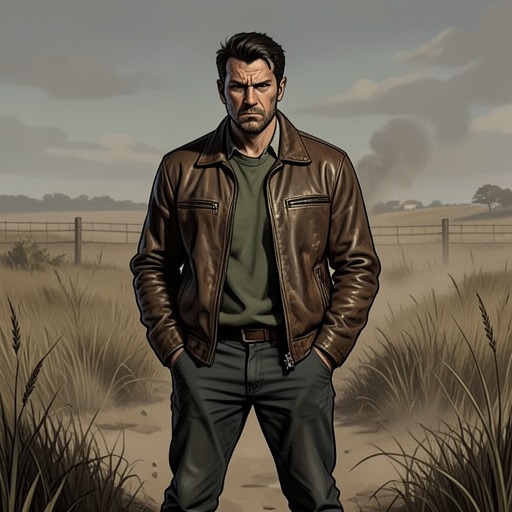
On the ranch, practical work gives masculine authority a daily, physical form. Ranch hands wear gloves for roping, fencing, branding, haying, and riding, protecting themselves from blisters, cuts, and rope burns. Phil refuses them, scorns the protection they offer, and allows his hands to remain marked by work. His dry, powerful hands become part of a cultivated image: toughness is not simply required by the job but displayed as a refusal to acknowledge pain or vulnerability.
The contrast extends to literacy and social roles. When the men struggle over mail-order forms, unsure of their handwriting, shipping weights, and postal zones, they turn to a more educated ranch hand for help with numbers and letters home. Phil’s derisive nicknames for Sears, Roebuck and Montgomery Ward reinforce his authority through mockery, but the scene also shows that the ranch’s hierarchy includes skills beyond physical strength. George Burbank handles the books, correspondence, telephone, buyers, and motorcar; Phil oversees haying, equipment, and field operations. Their divided responsibilities place administrative and managerial labor beside the strenuous work through which Phil defines his own masculine standing.
That work is organized around risk and expertise. Phil prepares the mowing equipment and haying camps, inspects the machines and tents, directs irrigation, and sets the start of haying for as soon as possible after the U.S. Independence Day holiday. The mowing-machine crews operate dangerous cutter bars and sharpen them after work. Because their tasks demand skill and expose them to danger, they receive extra pay, newer tents, a hearing, and first choice of the best steaks. The novel thus shows masculine status as partly earned through labor and recognized by a working community, even as Phil turns endurance into a harsher personal test and despises those who protect themselves.
Phil’s Performance and Concealment
Phil’s toughness is deliberately assembled from many abilities and habits. He is an accomplished rider, a reader, a taxidermist, a chess-problem solver, a metalworker, a banjo player, and a skilled maker of rawhide and horsehair braids. He also collects arrowheads and can fashion them himself. These talents make him capable and resourceful, but they sit beside a volatile temper and a gift for finding precisely the remark that will wound someone. His cultivation of roughness does not erase his intelligence or artistry; rather, it makes those capacities coexist uneasily with the narrow masculine standard he polices.
His private history gives that performance a deeper meaning. As a young man, Phil watched Bronco Henry die after being trampled in a bronc corral. The novel’s account connects Phil’s later hostility not simply to bereavement but to his recognition of desire for Bronco Henry, and to his knowledge that such desire would be treated as intolerable in the cowboy world he inhabits. He remakes himself as a conspicuously masculine rancher, using rough manners, deliberate disregard for gloves, and scorn for men he regards as effeminate to divert scrutiny from himself. His contempt for others can therefore function as preemptive defense: he tries to make the world recoil from his targets before it can turn its judgment on him.
Alcohol also reveals the pressure behind this control. Phil drinks sparingly because he fears that loosened speech might expose what he keeps hidden. His self-command contrasts with Johnny Gordon, who cannot resist liquor. In a Beech barroom, Phil humiliates the drunken doctor; Johnny’s humiliation corrodes him, and he dies by suicide a year later. Phil’s own restraint does not make him harmless: the scene links the masculine code’s contempt for weakness to a consequence that extends beyond the moment of public mockery.
Gender, Respectability, and Exclusion
Among the wandering ranch hands, women are sorted into a rigid moral division. Women judged sexually available are treated as undeserving of respect, while mothers, sisters, and childhood sweethearts are idealized as pure and almost sacred. The men preserve images of those idealized women among their belongings. Rose Gordon Burbank, slight in stature and seen around the yard, is placed in that second category, not treated by the men as an object of sexual pursuit. The distinction offers respect to an ideal rather than a full recognition of women as individuals; it leaves little room for a woman who does not fit either category.
The novel also places ranch masculinity against the coercive treatment of Indigenous people. The valley’s Indigenous residents are driven from their land and sent to a reservation; the government no longer honors treaties, and white voters’ political power shapes the account of why the policy proceeds. On the reservation, liquor is prohibited, and leaving requires a permit granted only for a pressing reason. The people are described as having nowhere to go and no friends to shelter them. These restrictions show that the power to define acceptable movement and conduct is not shared equally: white authorities impose rules on Indigenous lives while the ranch’s own masculine code governs belonging through ridicule, intimidation, and social exclusion.
Phil’s response to Edward Nappo and his son brings those systems into contact. When the father and son approach the ranch, Phil dismisses the father’s claim of connection to the land and orders both to leave. Later, Rose notices their cart again during a storm. The brief recurrence keeps their presence in the landscape visible even after Phil tries to remove them from the ranch. The episode is not identical to his policing of gender, but both expose a world in which Phil asserts authority by deciding who belongs and whose vulnerability merits no accommodation.
Peter and the Limits of the Code
Peter Gordon first reaches the ranch already marked as an outsider. Phil primes the ranch hands to ridicule his manner and paper flowers, and Peter’s arrival makes meals and daily life more tense. When Peter walks past the men after being mocked, wearing stiff new blue jeans, Phil recognizes a quality of resolve in him. The moment unsettles the assumption that gentleness or social isolation means weakness: Peter endures public scorn without conforming to the men’s expectations.
The encounter at Phil’s concealed bathing place changes the relation between them. Phil reacts angrily when Peter sees him there, but later interprets Peter’s decision to cut rawhide and offer to braid as a wish to imitate him. Peter’s hand on his becomes meaningful to Phil as a rare sign of contact. Phil connects this intimacy to his earlier attachment to Bronco Henry, whose death left him without the person with whom he had wanted to share such closeness. He also sees a parallel between Peter’s exposure to ridicule and his own sense of having been an outcast. That recognition does not immediately undo the cruelty of Phil’s conduct, but it reveals how the code that he has used to isolate others also shapes his understanding of himself.
Phil imagines that Peter’s presence in the hidden place, and their mutual glimpses of one another’s vulnerability, carry the force of fate. The contrast is pointed: Phil had helped make Peter an object of ridicule, yet comes to read the boy’s attention as acceptance and kinship. His attachment exposes the emotional need beneath the performance without making the ranch’s homophobia disappear. Instead, the novel shows how an enforced ideal of manhood can turn intimacy into something concealed, misread, and difficult to approach except through the very symbols of masculine labor—here, the rawhide braid—that Phil has made his own.
Significance
The novel presents Western masculinity as a structure maintained by habits, work, public judgments, and unequal power, not merely by individual temperament. Phil’s roughness and skill give him authority, but his contempt for vulnerability carries personal and social costs: Johnny is destroyed by a humiliation Phil helps inflict, Peter is targeted before Phil begins to seek his company, and Indigenous families face the force of land removal and movement restrictions. The same code that gives Phil a way to appear invulnerable also leaves him fearful of disclosure and hungry for connection.
Peter’s response makes the contradiction especially clear. He does not win acceptance by adopting the ranch hands’ manner; he remains observant and steadfast while their scorn continues. Phil, in turn, sees in him both an apparent admirer and a fellow outcast. Their developing connection exposes a possibility of recognition inside a culture organized around ridicule, but it does not erase the harm already done. The concept’s force lies in that unresolved tension: the performance of toughness can command respect and conceal desire, yet it also narrows the forms of care and belonging available to everyone subject to its rules.